
CAVWV
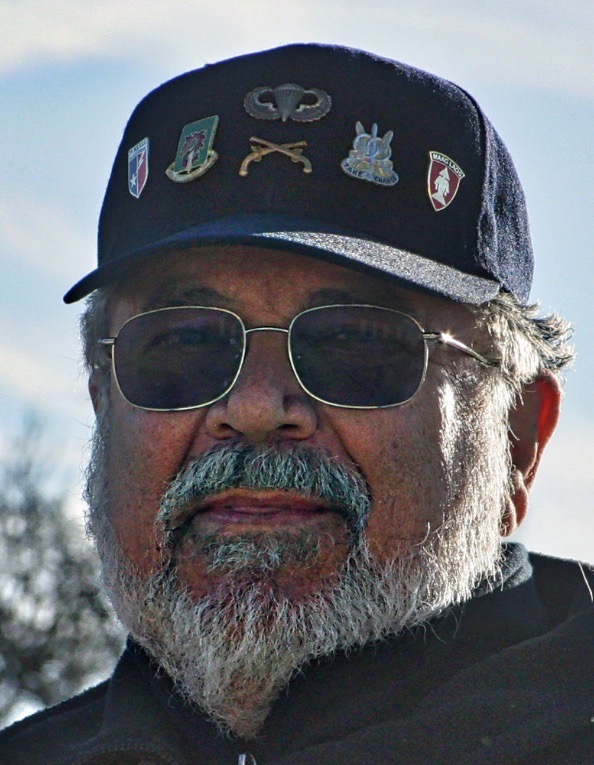
Thomas Leo Briggs, President, CAVWV – CIA Paramilitary Case Officer, Pakse, Laos, 1970–1972
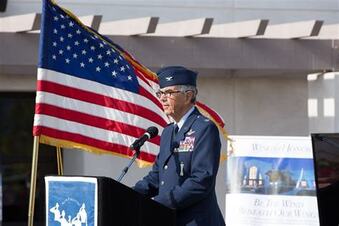
Col. (Ret) Philip J. Conran
This Memorial Day, America honors Maj. James Capers with a long-overdue Medal of Honor. Col. Philip Conran, 89, is still waiting for the same correction.
ST. PAUL, MN, UNITED STATES, May 25, 2026 /EINPresswire.com/ — This Memorial Day, America is honoring Major James Capers, Jr., USMC (Ret.), with the Medal of Honor he earned fifty-nine years ago at Phu Loc, Vietnam — a decoration delayed by bureaucratic failure, institutional obstruction, and the death of the general who had promised to see it through. The Capers case is now settled. The precedent it establishes is not: when the system fails a warrior, when a recommendation is lost or suppressed by process rather than merit, the wrong can be corrected. It can take decades. It can require an act of Congress. But it can be done.
Colonel Philip J. Conran, United States Air Force (Ret.), is eighty-nine years old. He is waiting for the same correction.
Col. Conran is an inductee in the Air Commando Hall of Fame. In eleven months of combat flying over Southeast Asia in 1969, he earned six valor awards, among the most decorated airmen of the Secret War. A Purple Heart, his final combat award, ended his flying status. He did not come home asking what America owed him. He came home asking what America owed the men who had served beside him.
That question has defined the fifty-seven years since.
Col. Conran’s combat record is a compressed portrait of what service in the Secret War demanded:
19 January 1969, Airman’s Medal: At Nakhon Phanom Royal Thai Air Force Base, after exiting a burning aircraft, Col. Conran returned through thousands of exploding rounds and the threat of igniting fuel to carry an immobile crewmember to safety.
7 February 1969, Distinguished Flying Cross: Infiltrated indigenous personnel deep into hostile territory and returned with minimum fuel to exfiltrate them under extremely heavy hostile fire.
14 February 1969, Distinguished Flying Cross, 2nd Award: Flew his helicopter to tree-top level in heavily defended hostile areas to deliver classified ordnance precisely on target, then diverted to rescue two indigenous personnel who were missing in action.
3 June 1969, Distinguished Flying Cross, 3rd Award with Combat ‘V’: Led an eight-ship formation on a deep infiltration mission, completed it successfully, then immediately returned through intense automatic weapons fire to rescue the team when they made contact with a large hostile force, saving them from certain death or capture.
5 May 1969, Distinguished Flying Cross, 4th Award: Accomplished a clandestine infiltration of a Forward Reconnaissance Team deep into hostile territory despite poor weather, numerous hostile forces, and ground fire.
6 October 1969, Air Force Cross: After his CH-3E was shot down at Moung Phine, Laos, he assumed command on the ground, organized the defense of the crash site against an overwhelming hostile force, and held it for six hours until all fifty-four survivors, eight American airmen and forty-six Lao allies, were safely extracted. The largest successful rescue of the Secret War. His commanding officer recommended him for the Medal of Honor.
Every one of those citations reads “Southeast Asia” or “classified location.” None names Laos. Each describes, in the mandatory language of official understatement, actions that in any acknowledged theater would have filled newspaper front pages.
The Vice Commander of Pacific Air Forces told Col. Conran personally why the Medal of Honor recommendation for the October 6 action had been downgraded. President Nixon had publicly stated that no American military operations were ongoing in Laos. The award was presented as an Air Force Cross. Col. Conran accepted it, as he had accepted every aspect of service that required him to subordinate personal recognition to the mission. That discipline has not changed in fifty-seven years.
The parallel to the Capers case is exact in its structure and different in its geography. General Hochmuth promised Capers the Medal of Honor and died before delivering it. Col. Conran’s commanding officer recommended the Medal of Honor and was overruled by a political instruction from above — not a judgment about his valor, but a statement about what the President had told the public. Both cases involve a recommendation that was made and not honored. Both involve institutional process failure, not merit failure. The Capers case is now resolved. The Conran case is open.
What has changed is his understanding of why the story must be told. Col. Conran does not speak of what he is owed. He speaks of what is owed to the men who cannot speak for themselves — to the twenty-two Ravens killed in action, to the twelve Americans who died at Lima Site 85, to the hundreds of airmen whose citations were sanitized before they were handed out, and to the Lao allies, lowland Lao, Lao tribesmen, and Hmong, whose sacrifice on behalf of American policy has never been fully acknowledged in American law or public memory.
“America didn’t forget these men. America never knew them. There is a difference, and it means there is still time to do something about it.” — Col. Philip J. Conran, USAF (Ret.), Air Commando Hall of Fame
Justin LeHew, Past National Commander of the Legion of Valor, has encouraged recognition of USAF special operations veterans and the 56th SOW community as a Memorial Day priority. Craig Duehring, Raven 27 and former Assistant Secretary of the Air Force, is in dialogue with CAVWV on the path forward for community recognition.
Col. Conran is available for media interviews. Contact: Tom Briggs, cavwv.president@gmail.com.
About CAVWV
CAVWV is a veteran advocacy nonprofit dedicated to recognition of American veterans and the Southeast Asian allies who served alongside them — Vietnamese (Kinh), Montagnards, Lao Loum, Lao Theung, Lao Sung, Nung, Khmer, and others whose contributions have been systematically overlooked in federal and state recognition programs. cavwv.org
Thomas Leo Briggs
Coalition of Allied Afghan & Vietnam War Veterans (CAVWV)
cavwv.president@gmail.com
Legal Disclaimer:
EIN Presswire provides this news content “as is” without warranty of any kind. We do not accept any responsibility or liability
for the accuracy, content, images, videos, licenses, completeness, legality, or reliability of the information contained in this
article. If you have any complaints or copyright issues related to this article, kindly contact the author above.

